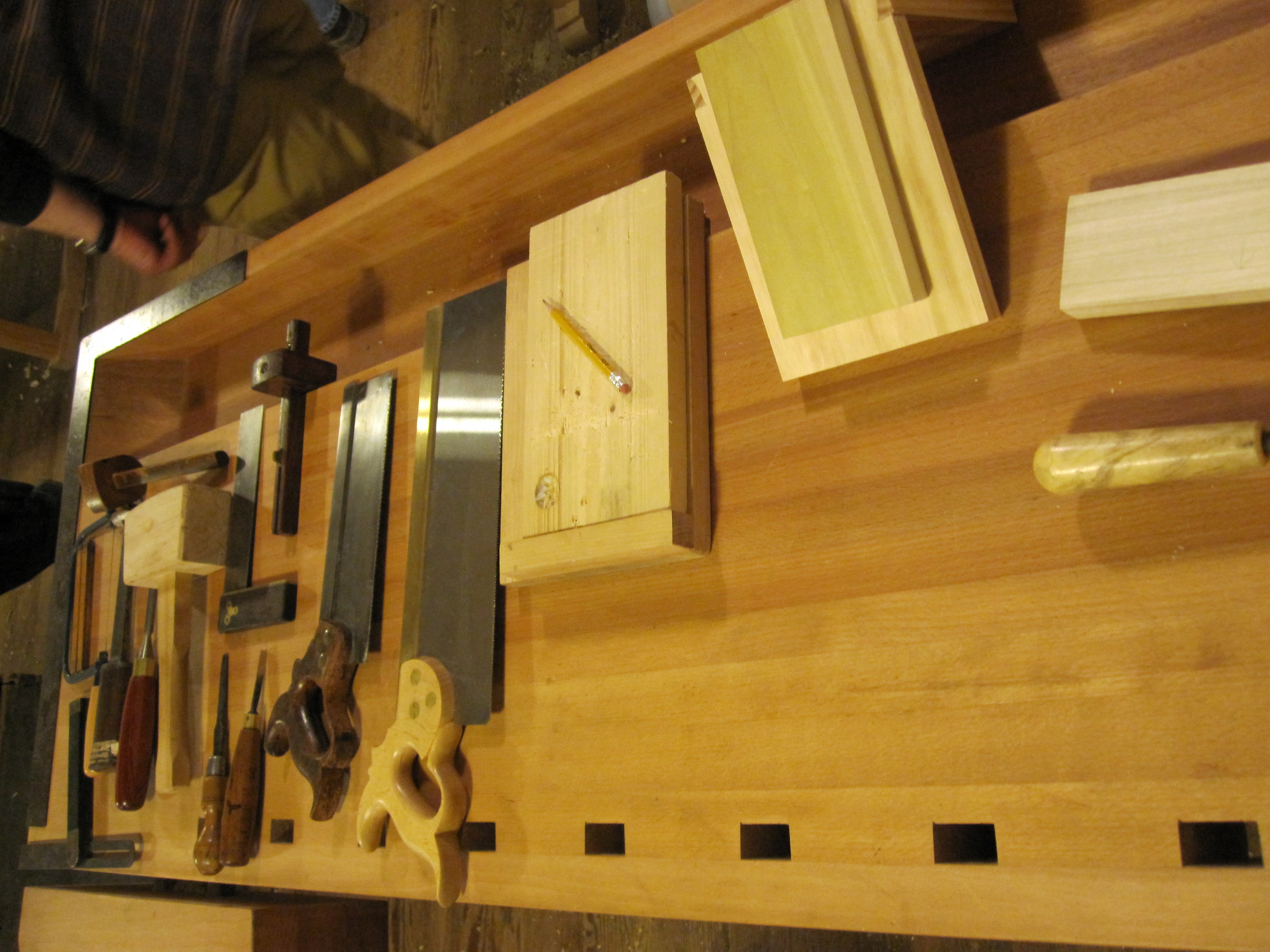
A solid workbench is the single most useful piece of equipment in a garage workshop. Commercial benches range from adequate to excellent, but building one from dimensional lumber produces a bench that is exactly the right height, depth, and length for the person using it — and costs a fraction of a comparable purchased unit.
The design described here is a trestle-style bench with four 4×4 legs, a doubled 2×6 or 2×8 top, and a simple lower shelf for storage. It is buildable in a day with a circular saw and a drill, using materials available at any Rona, Home Depot, or local building supply yard in Canada.
Materials and Dimensions
The bench described is 72 inches (6 feet) long, 24 inches deep, and 34 inches tall. Bench height is a subject of real practical consequence: a bench that is too high causes shoulder fatigue during hand planing; one that is too low causes lower back strain during assembly. The general guidance is to set the top surface at roughly knuckle height when standing with arms relaxed at the sides — for most adults this falls between 33 and 36 inches.
| Part | Lumber | Qty | Cut Length |
|---|---|---|---|
| Legs | 4×4 SPF | 4 | 33.5 in (adjustable for height) |
| Top boards | 2×8 SPF | 6 | 72 in |
| Front/back aprons | 2×6 SPF | 2 | 72 in |
| End aprons | 2×6 SPF | 2 | 21 in |
| Shelf boards | 2×6 SPF | 4 | 72 in |
| Leg stretchers | 2×4 SPF | 4 | 21 in |
SPF (spruce-pine-fir) dimensional lumber is the standard construction material in Canada and is sold at consistent prices across most provinces. For a workbench, No. 2 grade or better is sufficient; avoid boards with loose knots, significant warp, or end splits longer than 3 inches. Let the lumber acclimate in your garage for at least a week before assembly to reduce post-build movement.
Additional hardware: 3-inch and 3.5-inch construction screws (coarse thread, not drywall screws), 3/8-inch carriage bolts with washers and nuts for the leg-to-apron connection, and wood glue for the top lamination. A box of 5-inch timber screws for the top attachment completes the hardware list.
Building the Base
Step 1: Cut the Legs
Cut all four legs to the same length. If the bench will sit on a concrete floor, check whether the floor is level — it frequently is not in Canadian garages, particularly those built before 1990. Cut the legs slightly long, assemble the base, then trim any high legs by shimming a level across the top and marking each leg individually.
Step 2: Assemble the End Frames
Pair the legs into two end frames using the 21-inch end aprons and leg stretchers. Position the top apron 2 inches below the intended bench height to leave room for the top boards. Position the lower stretcher approximately 6 inches from the floor — high enough to clear sweeping but low enough to anchor the frame against racking.
Drill clearance holes and countersinks through the aprons into the leg faces, then drive two 3.5-inch screws at each joint. Add a bead of construction adhesive before fastening for rigidity. At the top apron-to-leg connection, also drive a 3/8-inch carriage bolt through the leg and apron — this joint takes the most stress during heavy clamping.
Step 3: Add the Long Aprons
Stand both end frames upright and connect them with the 72-inch front and back aprons. Check for square by measuring the diagonal distances corner to corner — they should be equal. Clamp the assembly square before driving fasteners.
Tip: Building the base on a flat garage floor with a level checked at multiple points during assembly prevents a twist from being built in. A twisted base is difficult to fix after the fact and results in a bench that rocks.
Building the Top
Laminating the Top Boards
A laminated top from multiple 2×8 boards produces a thick, rigid surface that resists deflection under clamping pressure. Arrange the boards so growth rings alternate direction (cup up, cup down, cup up) to reduce the tendency of the laminated panel to bow. Apply wood glue to the mating faces, clamp tightly with bar clamps spaced no more than 12 inches apart, and allow full cure (24 hours minimum) before removing clamps.
After the glue cures, flatten the top with a hand plane, a belt sander, or a router sled if there is significant unevenness at the glue lines. A flat reference surface makes layout work and assembly significantly more accurate.
Attaching the Top
Set the laminated top on the base with even overhang at each end (typically 2–3 inches). Drill clearance holes through the front and back aprons from below at a slight angle, then drive 5-inch timber screws up into the underside of the top. This approach, called drawboring or screw-tying, pulls the top firmly down onto the aprons without running screws through the top surface.
Lower Shelf
The four 72-inch shelf boards sit on the lower stretchers. Leave 1/4-inch gaps between boards to allow sawdust to fall through rather than accumulate. Attach the outer shelf boards with screws driven through the stretcher faces; the inner boards can rest loose to allow removal for cleaning.
Surface Treatment
Most workbenches benefit from a hardboard (Masonite) surface skin over the laminated top. A 1/4-inch hardboard sheet, cut to the bench dimensions and fastened with 1-inch screws around the perimeter, provides a smooth, uniform surface that can be flipped or replaced when worn. Leave the hardboard unfinished; oil finishes on a work surface attract sawdust and become sticky over time.
If the bench will be used with water-based finishes or will be exposed to moisture, apply one coat of tung oil or a Danish oil to the wood base structure. The top hardboard sheet provides the actual work surface and handles moisture exposure without damaging the structural lumber underneath.
Adding a Vise
A face vise mounted at the left end of the front apron (for right-handed users) is the most practical first addition to a basic bench. Cast-iron quick-release vises in the 7-to-9-inch jaw opening range are widely available at Canadian tool retailers. Mount the vise body to the underside of the bench apron per the manufacturer instructions, then add a wooden chop (a piece of 2×6 or hardwood) to the outer jaw face to protect work and extend the vise's effective depth.
Bench dogs — short pegs that fit into holes in the bench top and the vise chop — allow clamping large panels flat on the bench surface for hand planing. Drill a row of 3/4-inch dog holes at 4-inch intervals along the back edge of the top and the vise chop at the same spacing.
Estimated Material Cost
Lumber prices vary across Canadian provinces and shift seasonally. As a rough guide, the structural lumber for this bench (excluding hardware and vise) has typically ranged between $120 and $180 at large building supply retailers in Ontario and British Columbia in recent years. Hardware (screws, bolts, glue) adds $30–$50, and a basic face vise adds another $60–$120 depending on the jaw width and brand. The total is generally well below comparable commercial benches of similar dimensions and rigidity.